
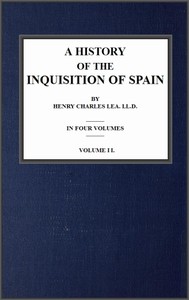
A History of the Inquisition of Spain; vol. 2 by Henry Charles Lea
Henry Charles Lea's second volume isn't a novel with a plot in the traditional sense. Instead, it's a forensic examination of the Spanish Inquisition's inner workings. Think of it as pulling back the curtain on a terrifying machine that had been running for decades. Lea, using thousands of original documents, shows us how the institution moved from its founding zeal into a mature, entrenched bureaucracy.
The Story
This volume focuses on the mechanics. How did the Inquisition actually function day-to-day? Lea walks us through its complex legal procedures—the arrests, the interrogations, the rules of evidence (or lack thereof). He details the infamous autos-da-fé, those massive public spectacles of punishment, explaining their purpose as both propaganda and terror. But perhaps most fascinating is his breakdown of the Inquisition's finances. He reveals how it funded itself by confiscating the property of the accused, creating a vicious cycle where the hunt for heretics was also a revenue stream. It's the story of an idea becoming an institution, and that institution learning how to survive and grow.
Why You Should Read It
You should read this not for thrilling narratives, but for a profound understanding of systemic power. Lea’s great strength is his dispassionate tone. He doesn't scream about the horrors; he calmly lists them, which somehow makes it all more disturbing. You see how rules were bent, how fear was weaponized, and how ordinary people were caught in the gears. It makes you reflect on how any system of absolute authority, regardless of its original intent, can corrupt itself. The book is a slow burn, but the insights stick with you.
Final Verdict
This is not a book for casual readers. It's dense, academic, and requires patience. But for history buffs, students of religion or political science, or anyone fascinated by the dark anatomy of institutional control, it's essential. It's the kind of book that changes how you look at history, authority, and the very human capacity for building machines of oppression. Pair it with a strong coffee and be prepared to sit with its heavy truths.
This title is part of the public domain archive. It is available for public use and education.
James Lee
1 year agoI've been looking for a reliable source on this topic, and the visual layout and supporting data make the reading experience very smooth. Simple, effective, and authoritative – what else could you ask for?
Elizabeth Taylor
10 months agoThe digital index is well-organized, making research much faster.
Karen Perez
1 year agoHaving explored several resources on this, I find that the critical analysis of current industry standards is very timely. This adds significant depth to my understanding of the field.
Sarah Brown
10 months agoInitially, I was looking for a specific answer, but the objective evaluation of the pros and cons is very refreshing. It cleared up a lot of the confusion I had previously.






Karen Martinez
3 months agoInitially, I was looking for a specific answer, but the footnotes provide extra depth for those who want to dig deeper. Definitely a five-star contribution to the field.