M
McKenna Nordbrock
Guest
- Thread Author
- #1
String of pearls, watermelons, bananas, turtles, hearts, and so many more – with just a name, it’s easy to envision exactly how much interest these popular dangling houseplants can bring to your collection. And the fun conversations they inspire.
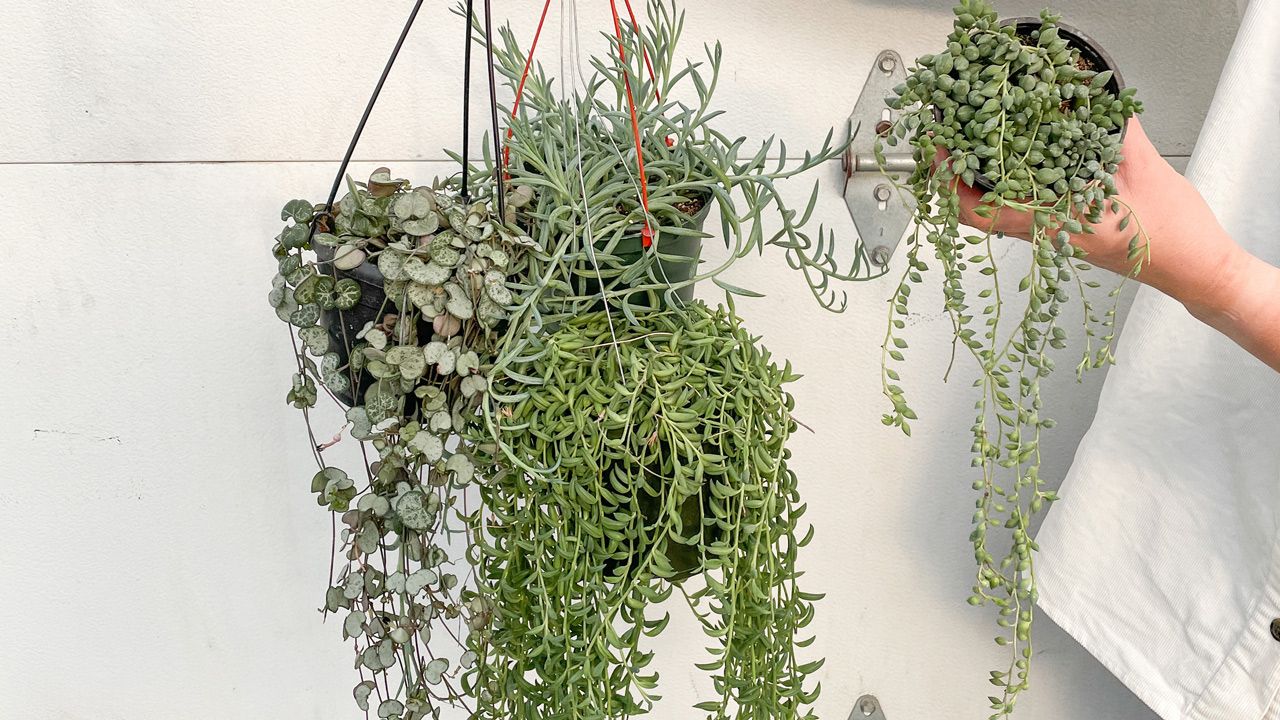
Members of the “string of” club share a common look. Each produces cascades of long, slender stems strung with intriguing succulent leaves shaped exactly like their name implies.
However, while they look similar in form, the plants in this group are not always closely related, creating an array of interesting foliage shapes and colors to admire and collect.
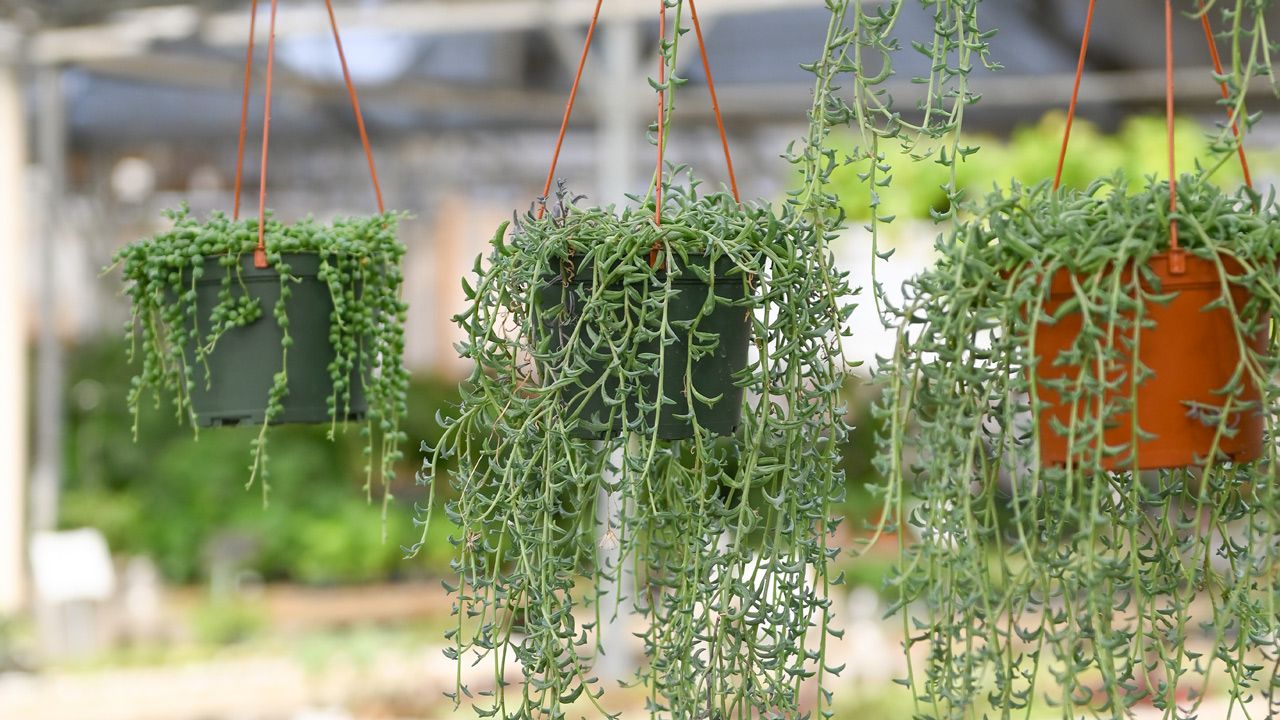
For instance, string of pearls, watermelons, bananas, dolphins, and fishhooks all belong to the genus Curio (formally Senecio). Native to arid environments in southern Africa, these plants trail along the ground in the shade of rocks and other plants.
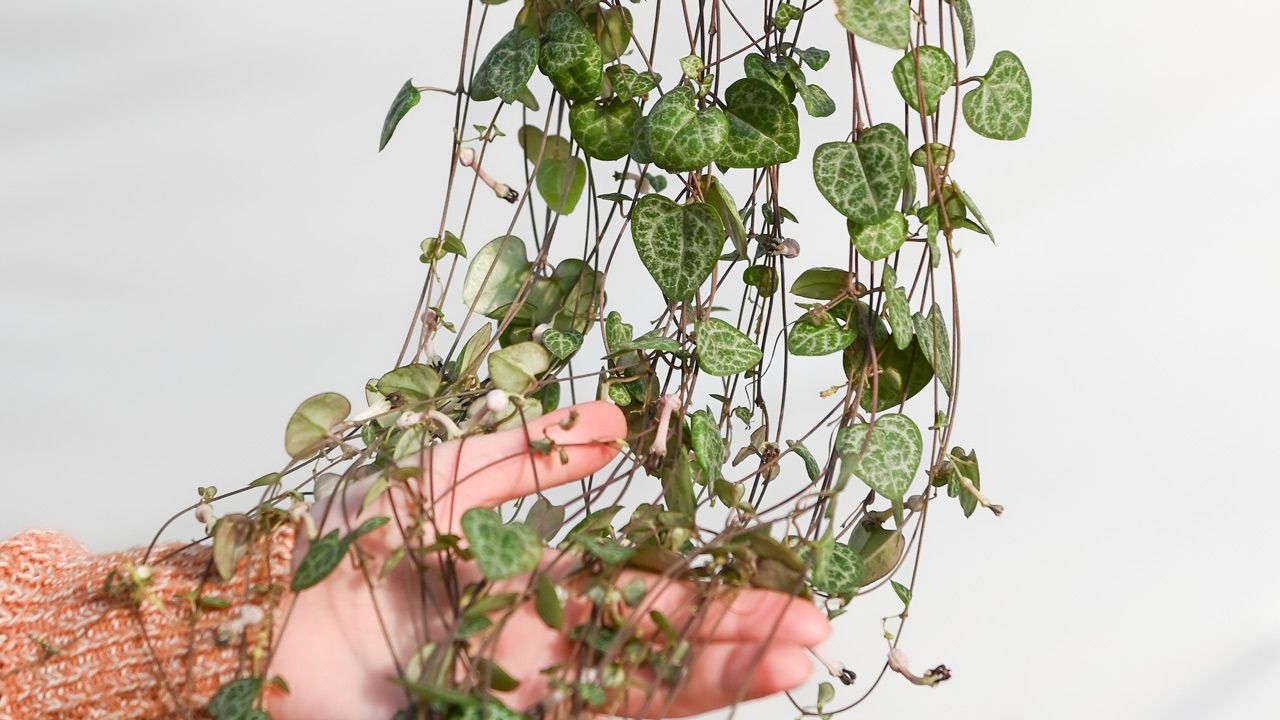
String of hearts and string of spades belong to a separate genus, Ceropegia. Their sweet little leaves appear in pairs along the stems and display interesting variegation in shades of green, silver, and purple.
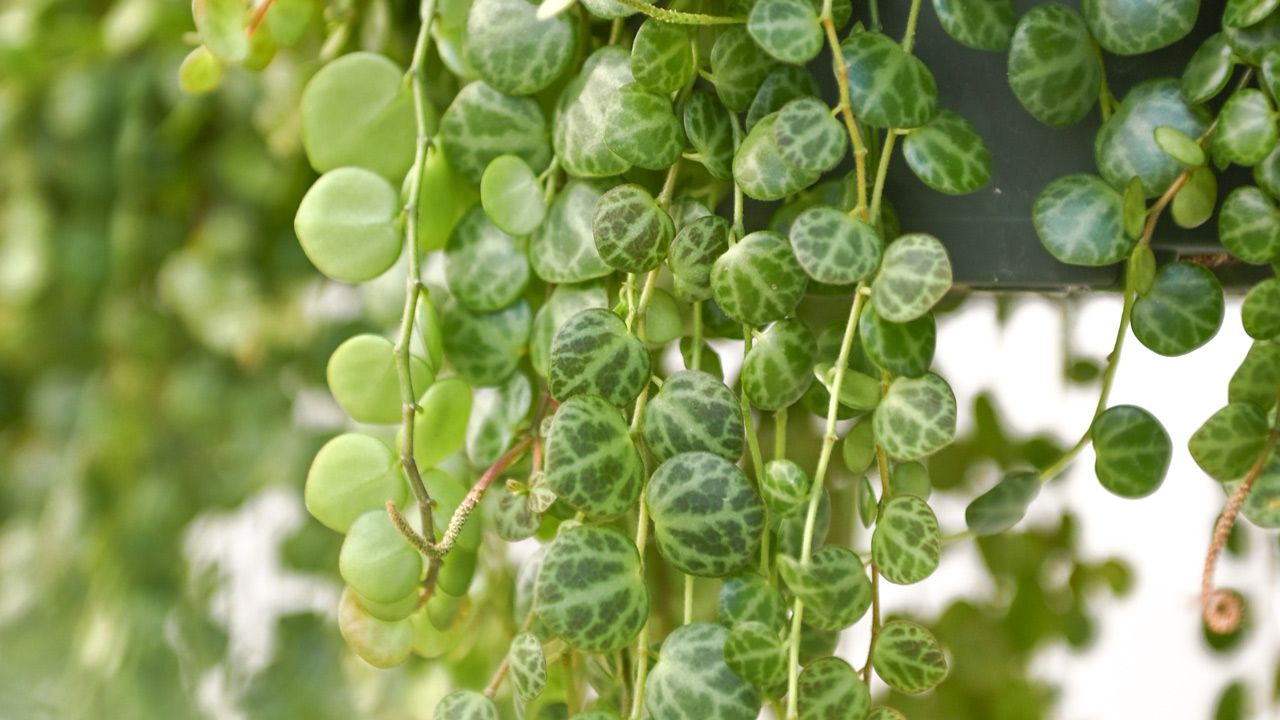
But a string of turtles might be especially charming. Still a succulent, string of turtles is classified in the genus Peperomia and comes from tropical Ecuador. The unique marbled pattern on each leaf looks exactly like you imagine it would.
Like most succulents, the “string of” group is easy to care for, asking for very little in comparison to the texture and interest they create in your home or office.
Indoors, these plants thrive daily in six or more hours of bright, indirect light. Hanging near a west or south window is just right. Outdoors, they’ll need protection from direct sun – bright, dappled shade is best.
Most of these plants are native to arid regions, so let the soil dry a couple of inches down between deep waterings and allow excess water to escape from the drain holes. Be careful not to overwater – this can lead to root rot or straggly growth. But for all species in this group, underwatering is still a consideration. If the leaves begin to wrinkle, it’s definitely time for a thorough drink.
Use a well-draining houseplant potting mix – one designed for cacti and succulents is perfect. An unglazed clay container is recommended to help keep the soil from staying wet, and drain holes are a must.
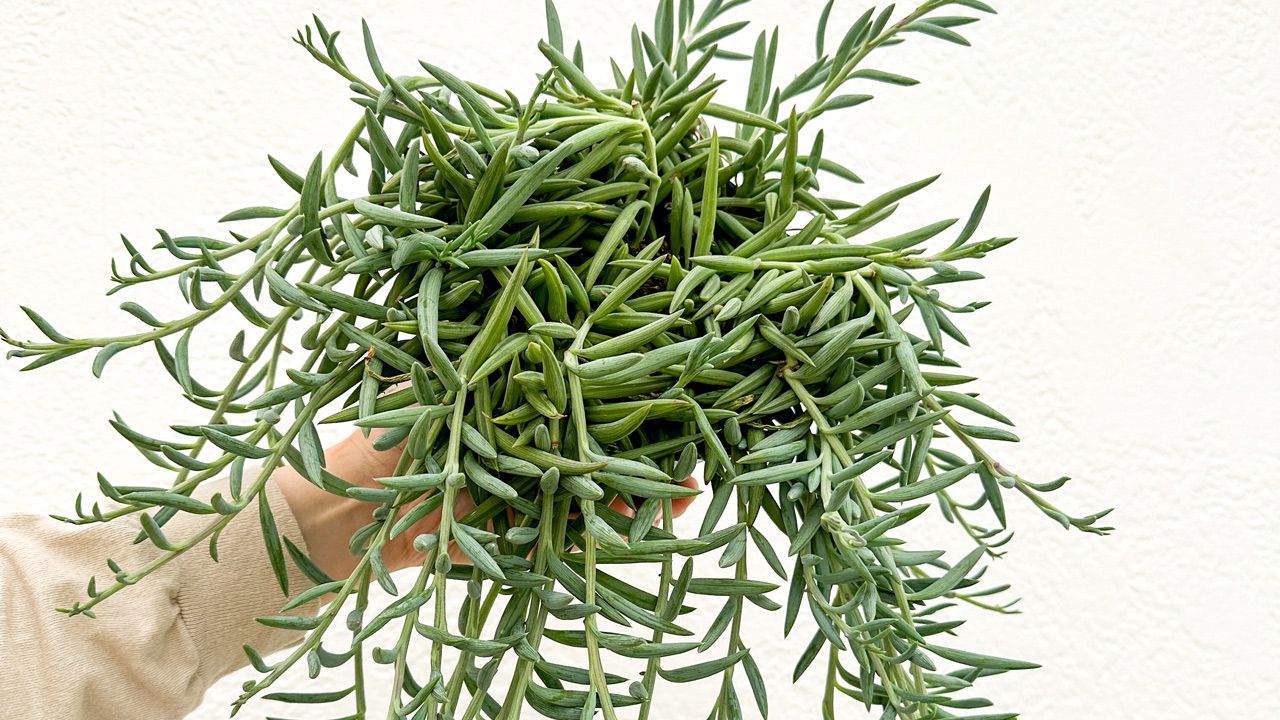
These plants thrive in a typical indoor environment with no extra humidity added. They enjoy warmth, so if they spend their summers outdoors, be sure to bring them inside when temperatures drop below 50 degrees. And while inside, protect them from drafts and chilly windows.
Feed “strings of” plants lightly. They’re happy with a gentle fertilizer formulated for cacti and succulents, especially during the growing season. Or you can give a balanced houseplant fertilizer diluted to half strength.
The strings group propagates easily with stem cuttings. For one method, cut a 3–4-inch length of healthy stem, remove 2 -3 of the lowest leaves, and set the stem aside to dry for a day or two. Then, stick the end of the cut stem in slightly moist, well-draining soil to the root.
Depending on the species, stem cuttings may also root when placed in water, or after being planted directly, or when simply laid on top of moistened soil.
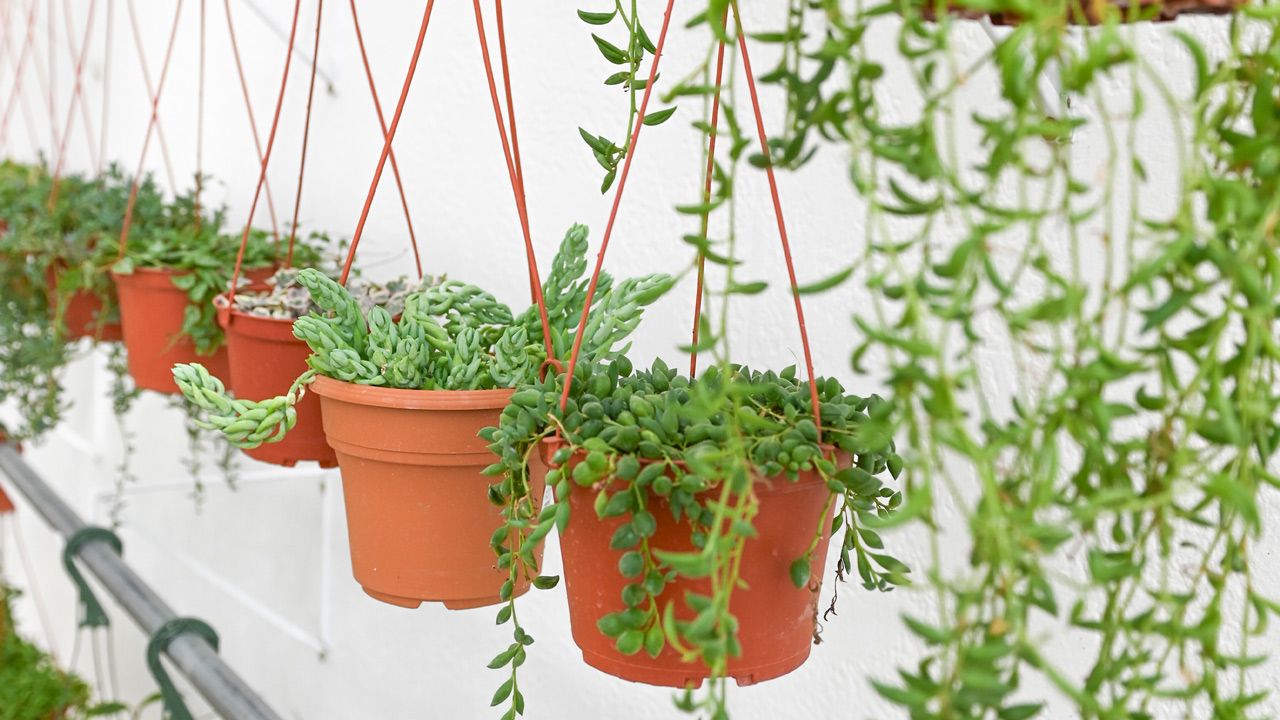
There is some variation within the group, but many of these plants are considered mildly toxic when ingested. To be sure, keep away from pets and small children, and pick up any dropped leaves quickly.
Come visit the Greenhouse and explore our “string of” collection. If your wish list includes interesting foliage, a unique look, and an easy-care personality, this group is a perfect place to start.
The post String Plants Made Simple: Care, Varieties, and More first appeared on Mulhalls.
A Common Vibe
Members of the “string of” club share a common look. Each produces cascades of long, slender stems strung with intriguing succulent leaves shaped exactly like their name implies.
But Unique Personalities
However, while they look similar in form, the plants in this group are not always closely related, creating an array of interesting foliage shapes and colors to admire and collect.
For instance, string of pearls, watermelons, bananas, dolphins, and fishhooks all belong to the genus Curio (formally Senecio). Native to arid environments in southern Africa, these plants trail along the ground in the shade of rocks and other plants.
String of hearts and string of spades belong to a separate genus, Ceropegia. Their sweet little leaves appear in pairs along the stems and display interesting variegation in shades of green, silver, and purple.
But a string of turtles might be especially charming. Still a succulent, string of turtles is classified in the genus Peperomia and comes from tropical Ecuador. The unique marbled pattern on each leaf looks exactly like you imagine it would.
Easy Care
Like most succulents, the “string of” group is easy to care for, asking for very little in comparison to the texture and interest they create in your home or office.
Light
Indoors, these plants thrive daily in six or more hours of bright, indirect light. Hanging near a west or south window is just right. Outdoors, they’ll need protection from direct sun – bright, dappled shade is best.
Water
Most of these plants are native to arid regions, so let the soil dry a couple of inches down between deep waterings and allow excess water to escape from the drain holes. Be careful not to overwater – this can lead to root rot or straggly growth. But for all species in this group, underwatering is still a consideration. If the leaves begin to wrinkle, it’s definitely time for a thorough drink.
Soil
Use a well-draining houseplant potting mix – one designed for cacti and succulents is perfect. An unglazed clay container is recommended to help keep the soil from staying wet, and drain holes are a must.
Environment
These plants thrive in a typical indoor environment with no extra humidity added. They enjoy warmth, so if they spend their summers outdoors, be sure to bring them inside when temperatures drop below 50 degrees. And while inside, protect them from drafts and chilly windows.
Fertilizer
Feed “strings of” plants lightly. They’re happy with a gentle fertilizer formulated for cacti and succulents, especially during the growing season. Or you can give a balanced houseplant fertilizer diluted to half strength.
Propagation
The strings group propagates easily with stem cuttings. For one method, cut a 3–4-inch length of healthy stem, remove 2 -3 of the lowest leaves, and set the stem aside to dry for a day or two. Then, stick the end of the cut stem in slightly moist, well-draining soil to the root.
Depending on the species, stem cuttings may also root when placed in water, or after being planted directly, or when simply laid on top of moistened soil.
Toxicity
There is some variation within the group, but many of these plants are considered mildly toxic when ingested. To be sure, keep away from pets and small children, and pick up any dropped leaves quickly.
Come visit the Greenhouse and explore our “string of” collection. If your wish list includes interesting foliage, a unique look, and an easy-care personality, this group is a perfect place to start.
The post String Plants Made Simple: Care, Varieties, and More first appeared on Mulhalls.