
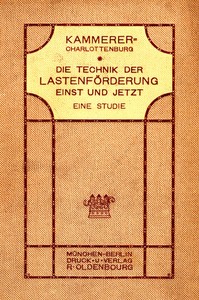
Die Technik der Lastenförderung einst und jetzt by Otto Kammerer
Okay, let's be clear: this is not a novel. There's no protagonist named Jack fighting to save the harbor. 'Die Technik der Lastenförderung einst und jetzt' is a technical history book. Published in 1912, it's a detailed, illustrated survey written by engineer Otto Kammerer. He systematically walks us through the entire evolution of how humans have moved heavy objects.
The Story
Kammerer starts at the very beginning, with the simple levers and ramps used to build pyramids and temples. He then guides us through the Middle Ages, showing the clever use of winches and treadwheel cranes in cathedral construction. The heart of the book, however, beats with the Industrial Revolution. Here, Kammerer gets truly excited. He details the steam-powered cranes that transformed ports, the complex systems of elevators and conveyors in factories, and the machinery that made skyscrapers and massive ships possible. The book is packed with diagrams and photos, serving as a catalog of the tools that built the early 1900s. The 'plot' is the relentless, upward trajectory of engineering itself.
Why You Should Read It
You should read it for the atmosphere and the perspective. Reading this in the 21st century is a strange experience. Kammerer writes with absolute faith in progress and technology as pure forces for human betterment. There's no hint of the world wars, environmental concerns, or digital revolutions to come. This unshakable belief gives the book a poignant, almost haunting quality. You're seeing our modern infrastructure through the eyes of its most optimistic architect. It makes you look at a simple forklift or a construction crane with new respect, understanding them as the latest chapters in a story that began with logs rolling under stone blocks.
Final Verdict
This book is a niche treasure. It's perfect for history buffs, engineers, or anyone fascinated by the silent machinery of everyday life. If you've ever watched a ship being unloaded at a port or gazed up at a steel bridge and wondered 'how did they even start?', this is your book. It's not a casual beach read, but for the right reader, it's a captivating time capsule. Think of it as a museum exhibit you can hold in your hands, written by a guide who truly believed the future was built of iron and steam, and it was going to be glorious.
There are no legal restrictions on this material. You are welcome to share this with anyone.
Paul Torres
1 year agoText is crisp, making it easy to focus.
Andrew Moore
4 months agoPerfect.
David Rodriguez
10 months agoGreat read!








Paul Hill
4 months agoIf you enjoy this genre, the atmosphere created is totally immersive. I would gladly recommend this title.