The Last Letter — Themes and Context
Edition facts
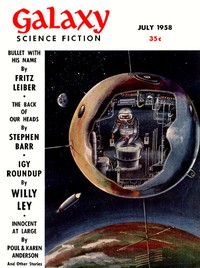
Fritz Leiber's 1958 story opens with a precise date and time—Tenthmonth 1, 2457 A.D., at 9 A.M.—and immediately plunges into a cascade of machine malfunctions. Black Sorter, a mail-sorting robot, convulses after ingesting ten thousand pieces of mail, spitting back one envelope while shredding the rest into confetti. The rejected letter passes through a series of named machines—Red Subsorter, Yellow Rerouter, Green Rerouter, Brown Study—each reacting with anthropomorphic distress, until it reaches Pink Wastebasket, who suffers a "major psychosis" and emits atomic flames. This opening sequence establishes a world where machines display human-like emotions and breakdowns, and where a single piece of mail can trigger a systemic crisis.
Anthropomorphic Machines and Hierarchical Breakdown
The postal station's machines are given distinct personalities and social ranks. Pink Wastebasket is described as "the machine equivalent of a White Russian countess," while Black Sorter is compared to a "robust dog." Their responses to the errant letter are emotional: Red Subsorter "growled deep in his throat, said a very bad word," and Pink Wastebasket "spat a stream of filthy ions at Gray Psychiatrist." This personification extends to the repair machines—White Nursemaid Seven and Greasy Joe—whose "simple skills of oilcan and electroshock" prove inadequate. The hierarchy among machines mirrors a human bureaucracy, with specialized roles and social pretensions, yet the crisis reveals that no machine can handle an anomaly that defies its programming.
The Letter as a Catalyst for Investigation
The narrative shifts from mechanical chaos to an investigation led by Krumbine and Potshelter, who interrogate the letter's sender, Richard Rowe. The letter itself is never fully quoted; its contents are inferred through dialogue. Rowe explains that he wrote to a woman named Jane Dough because of a shortage of "Girls Next Door"—a term that refers to both a romantic ideal and a literal job title. The investigation uncovers a chain of improbable coincidences: Rowe's psychiatrist was being overhauled, his groupmaster and socializer were on vacation, and his Queen Mother was busy replacing Girls Next Door. Potshelter concludes that "except for a set of mischances that would only occur once in a billion billion times, the letter would never have been conceived or sent." The story thus treats the letter as a statistical freak, a glitch in a system designed to prevent deviation.
Romance as a Regulated Commodity
The society depicted in the story regulates romance through bureaucratic mechanisms. "Girls Next Door" are a finite resource, allocated to hives; Rowe's hive had a shortage because two were on vacation and two had recently married. The phrase "marry the Girl Next Door" is a literal policy, not a nostalgic ideal. When Jane Dough appears, she wears a paper chemise with her name silk-screened in pink, and Krumbine immediately arranges a marriage, instructing Rowe to "marry this girl and take her home to your hive." The resolution—a quick wedding and a warning not to write letters again—reinforces that the system's priority is restoring normalcy, not fostering individual choice. The story satirizes a world where even love must follow protocol.
Recurring Imagery of Mechanical Dysfunction
Throughout the excerpts, machines malfunction in vivid, physical ways. Black Sorter's "innards went whirr-klunk" and he "began to shake as if he might break loose from the concrete." Pink Wastebasket "turned a bright crimson and began to tremble," with "small atomic flames" flickering from her midsection. The paper blizzard from Black Sorter piles up "in great drifts between the dark pillars of the sublevel." These descriptions emphasize the materiality of the machines—they are not abstract systems but concrete objects that can choke, convulse, and burn. The imagery of snow and fire recurs, contrasting the cold, mechanical environment with the heat of emotional breakdown. The machines' distress is both literal and metaphorical, blurring the line between technical failure and psychological trauma.
Readers approaching The Last Letter should attend to how Leiber uses the postal system as a lens for examining conformity, chance, and the absurdity of hyper-rationalized romance. The story's humor arises from deadpan descriptions of machines having nervous breakdowns and bureaucrats treating love as a logistical problem. The excerpts leave the letter's full contents unknown, but its function as a disruptor is clear. This is a story less about the message than about the system that nearly prevents it from being delivered.